by Edentu Oroso, Publications Unit
Federal University Otuoke, Bayelsa State, Nigeria, has sought a strategic partnership with the Nigerian Content Development and Monitoring Board, NCDMB, to deepen research, strengthen indigenous capacity and accelerate human capital development in the oil and gas sector.
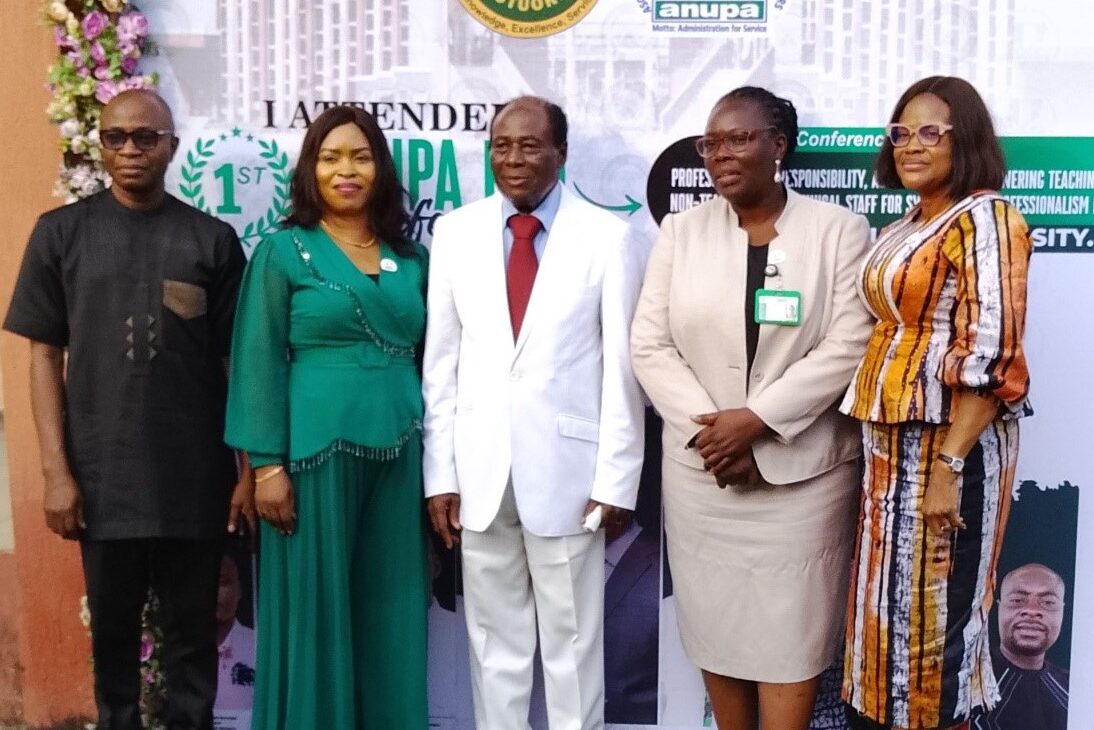
The Vice-Chancellor, Professor Promise Mebine, made the proposal on Wednesday, September 23, 2026, when he received a delegation representing the NCDMB’s Executive Secretary, Engr. Felix Omatsola Ogbe, who was Guest Speaker at the maiden Public Lecture of the FUO School of Postgraduate Studies. The lecture, titled “Driving Sustainable National Development Through Local Content, Innovation and Strategic Partnerships,” was delivered on Ogbe’s behalf by the NCDMB Director of Planning, Research and Statistics, Engr. Silas Omomehin Ajimijaye.
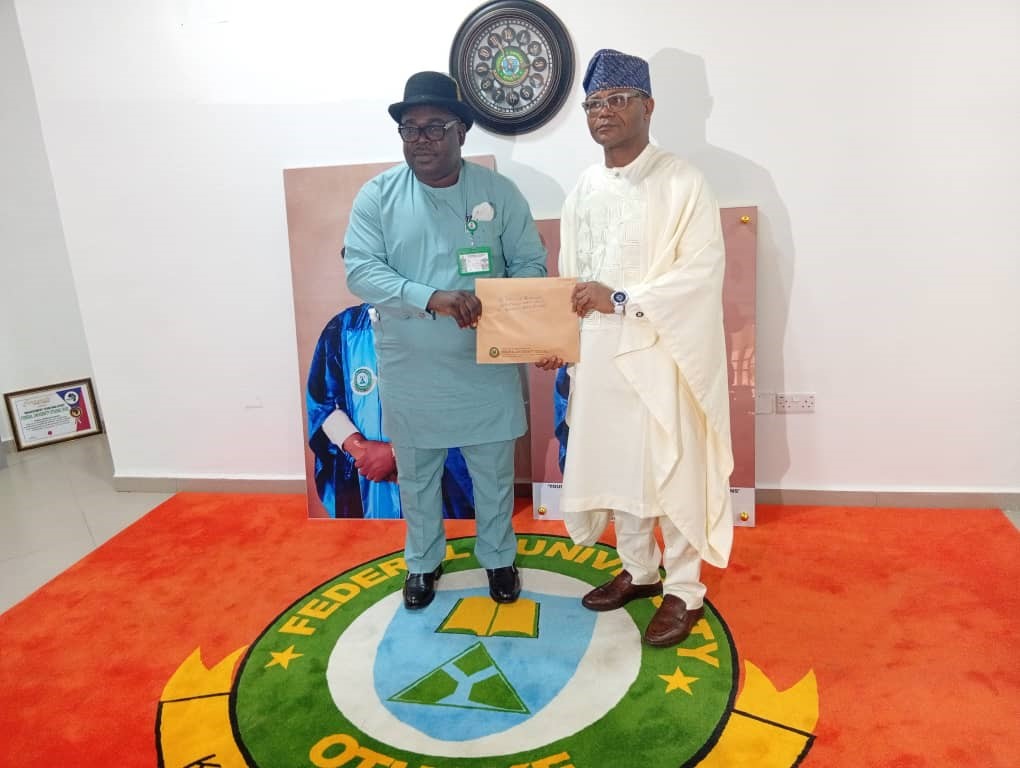
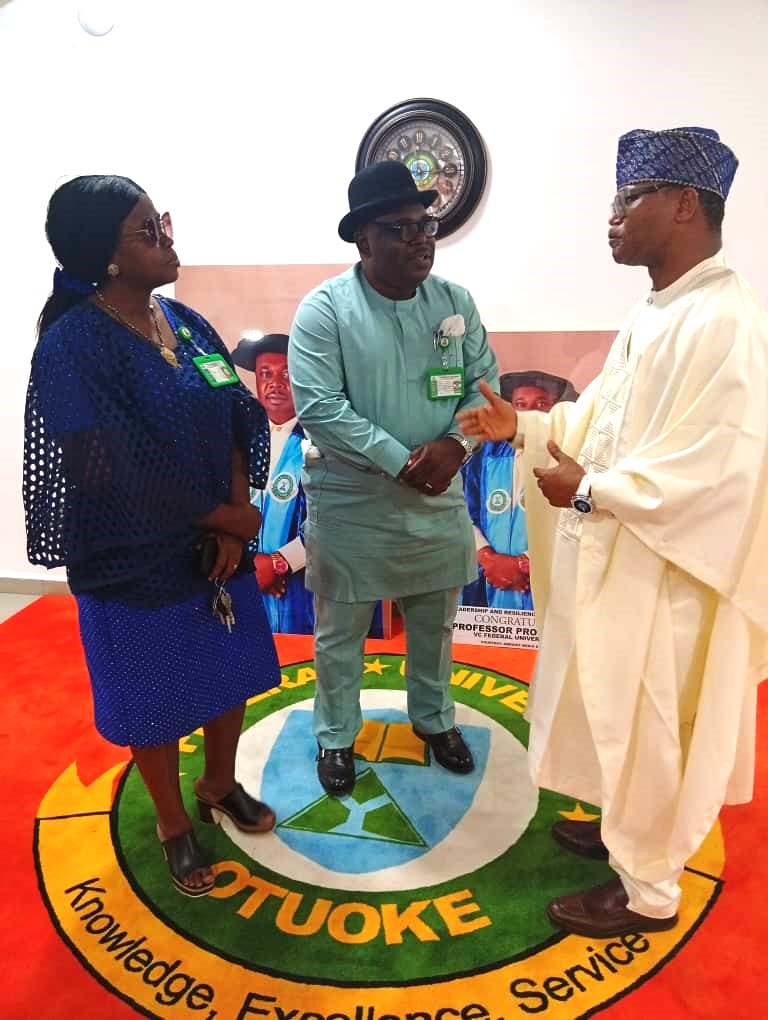
Receiving the delegation at his office on the university’s West Campus, Professor Mebine said a closer relationship between FUO and the NCDMB would create opportunities for both federal institutions to contribute more meaningfully to the development of indigenous expertise, technologies and practical solutions to challenges facing the oil and gas industry. He identified research and development, knowledge expansion, skills acquisition, technology development, community engagement and human capital development as priority areas for collaboration, arguing that universities must move beyond producing academic knowledge for its own sake and ensure their research addresses real-world industrial and societal challenges.
“We propose a strategic collaboration between Federal University Otuoke and the Nigerian Content Development and Monitoring Board,” he said, explaining that the partnership would focus particularly on industry-oriented research capable of addressing practical challenges in the oil and gas sector, including areas that may not be readily apparent to the wider public but fall within the NCDMB’s expertise.
He further emphasised, “We propose collaborations that seek to establish sustainable frameworks through which the university’s academic expertise, research facilities, ecosystem, innovations and human resources can be aligned and identified with ecological, technological, operational and developmental challenges confronting the oil and gas industry.”
Professor Mebine also drew attention to the paradox of Nigeria’s vast natural-resource wealth and the persistent underdevelopment of many resource-producing communities, stating that “Nigeria is so blessed, but what are we doing with it?” He noted that FUO currently has about 20,000 students, 15 faculties and 52 degree programmes, and described the university as strategically positioned to contribute to national development through research and knowledge production, especially against the backdrop of the institution’s on-going degree programmes in Petroleum, and Gas engineering.
Reflecting on the history of Nigeria’s oil industry, he said the discovery of commercial oil at Oloibiri, in present-day Bayelsa State, in 1957 should have translated into greater development for the community and the wider Niger Delta.
“I’m bold to say it anywhere I go that Nigeria is Nigeria because of Bayelsa State,” he said. “Oil was first discovered at Oloibiri in Bayelsa State in 1957, but if you visit Oloibiri, you’d be appalled at the level of underdevelopment there. They don’t even have pipe-borne water there. The question is, where is the money going?”
He argued that the gap between the country’s resource endowment and its development outcomes makes local content, research and technological capacity critical to Nigeria’s future, noting that “Nigeria is so blessed. Everywhere you turn to, there are mineral resources everywhere. But the question is, what are we doing with it? It’s a big question that’s yet to be answered.”
The Vice-Chancellor also stressed that Nigerian researchers and institutions possess knowledge capable of gaining international recognition, but that greater effort is required to identify, develop and commercialise such intellectual capital. Drawing on his own experience, he recalled that after completing his terminal degree in the United Kingdom, he later went to Oman, where a research article he had written in the UK was being used to train PhD students.
“I was invited because of the job I did, an article I wrote locally in the UK but globally accepted in Oman. They were using it to train other PhD students in Oman,” he said. “That’s why I was invited, and I made lots of money from it. Just one article.”
For him, the experience demonstrated that locally generated knowledge can have significant international value when properly developed, recognised and deployed. “That tells you that we’re relevant, but it appears we don’t know what we have,” he said, urging the NCDMB to help universities and researchers better understand the global significance of their work. He stressed that “As Local Content Board, it’s important you make us understand what we’re doing is important to the global world.”
Professor Mebine said the proposed collaboration would also strengthen ties between postgraduate education, academic research and industry, noting: “We’re going to form a joint technical coordination team to be led by the Dean, School of Postgraduate Studies, Professor Iheoma M. Adekunle.”
He said the NCDMB’s participation in the university’s maiden postgraduate public lecture was significant because it would expose students and academics to perspectives from an institution directly involved in shaping Nigeria’s local-content agenda: “We believe that your insight will provide an invaluable perspective to our students, our staff and wider academic community in furtherance of the university’s commitment to impactful research, innovation, human capital development and meaningful engagement with industry.”
Professor Mebine also drew the attention of the NCDMB to its Oil and Gas Park located between Emeyal 1 and Otuoke, which, he observed, had remained largely underutilised for several years.
He urged the Board to consider granting Federal University Otuoke access to the facility, arguing that it could serve as a valuable practical training centre as a faculty for students enrolled in the university’s petroleum, oil and gas related programmes.
According to him, the university has relevant academic programmes but, as a relatively young institution, lacks some of the specialised facilities required to provide students with adequate hands-on training. He therefore proposed that the existing NCDMB facility could be leveraged to bridge the gap between classroom learning and practical industry experience.
The proposal, he said, would not only expose students to industry-standard facilities but also strengthen the university’s capacity to produce graduates with practical skills relevant to Nigeria’s oil and gas sector.
Responding to the proposal, the Director, Planning, Research and Statistics of NCDMB, Mr. Silas Omomehin Ajimijaye, expressed appreciation to Professor Mebine and his management team for inviting the NCDMB Executive Secretary as guest speaker at the maiden Public Lecture Series of the School of Postgraduate Studies, Federal University Otuoke.
Engr. Ajimijaye said the Board was encouraged by the Vice-Chancellor’s passion for building a strategic partnership that could deliver measurable benefits to both institutions and, ultimately, to the country.
“I’m really very pleased with the way you spoke with passion,” Ajimijaye said. “The problems you’re trying to solve are those you’re passionate about. That hunger or passion will trigger the mind to proffer the right solutions. And I believe that’s one of the reasons why we’re having this collaboration.”
He explained that although the Executive Secretary could not attend the engagement in person because he was away on a trade mission outside the country, he had been mandated to facilitate the linkage between the university and the Board within the scope of his responsibilities.
“My role is to have the linkage set up for the academia within the purview of my role as the Director of Planning, Research and Statistics, NCDMB,” he said. “I believe we’ll do justice to that.”
Engr. Ajimijaye, however, clarified that the NCDMB Oil and Gas Park at Emeyal-1 should not be regarded as “fallow”, as the Vice-Chancellor had suggested. Rather, he said, the issue was that Federal University Otuoke had yet to fully engage the Board to take advantage of the facilities, opportunities and institutional linkages available through the park.
He noted that other universities across the country were already benefiting from such engagements with the NCDMB, suggesting that FUO could similarly leverage the Board’s programmes and facilities to strengthen practical training, research and capacity development.
The clarification comes against the backdrop of the NCDMB’s ongoing efforts to operationalise the Nigerian Oil and Gas Park Scheme, NOGaPS, at Emeyal-1. The Board has said several facilities at the park have been completed, including manufacturing shop floors, classrooms, a water-treatment plant and accommodation facilities, with the facility targeted for full operation in the fourth quarter of 2026.
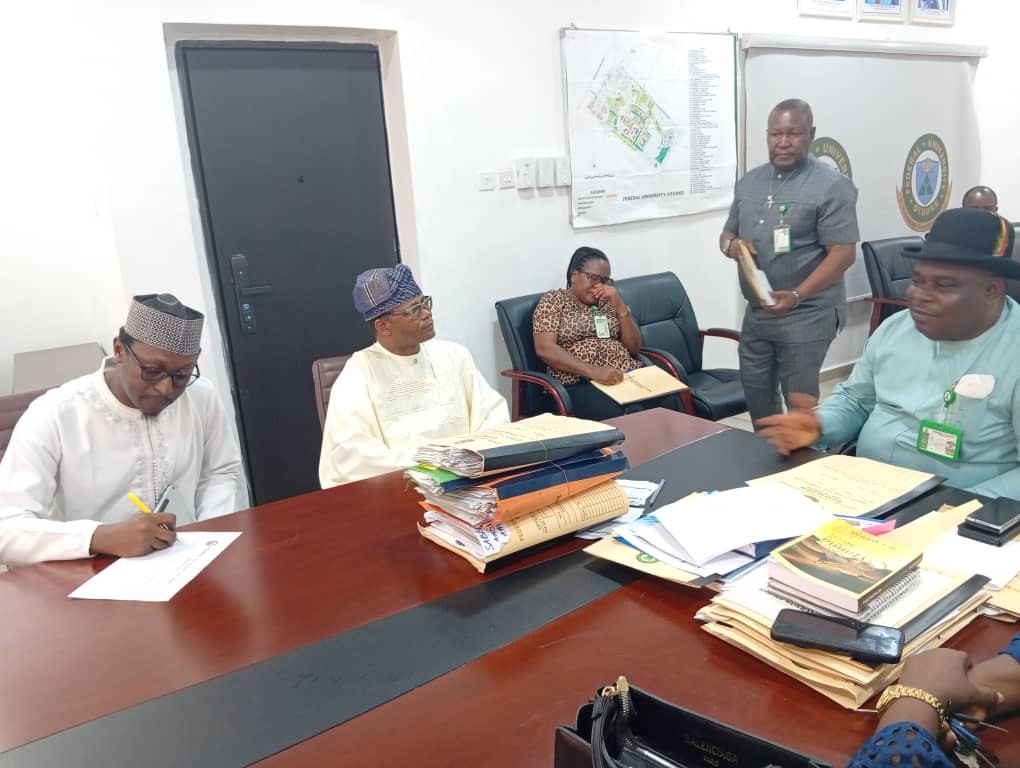
Engr. Ajimijaye’s intervention therefore shifted the emphasis from the availability of the facility to the need for a stronger institutional interface between FUO and the NCDMB, with the university encouraged to identify and maximise the opportunities already available through the Board.
A structured FUO-NCDMB relationship could give postgraduate researchers greater access to industry-defined problems, while creating opportunities to develop technologies, skills and knowledge applicable to the oil and gas sector and the wider Nigerian economy. Such an arrangement could also support the university’s broader institutional priorities, including academic excellence, relevant research, institutional sustainability, people and governance, and transformative community engagement – consistent with the NCDMB’s own mandate to strengthen Nigerian participation in the industry through local capacity, research, innovation and human capital development.
For FUO, the collaboration presents an opportunity to position the university more firmly within the research and innovation ecosystem of the Niger Delta, while giving academics and students a platform to work on practical challenges confronting the region and the national economy.
Professor Mebine assumed office as Vice-Chancellor of Federal University Otuoke in February 2026, succeeding Professor Teddy Charles Adias, the university’s third Vice-Chancellor. The proposed FUO-NCDMB partnership represents an early step in the Mebine administration’s effort to connect academic excellence with industry, research with practical application, and the university’s human resources with the development needs of the Niger Delta and Nigeria at large.