
by Edentu Oroso, Publications Unit
The Vice-Chancellor of the Federal University Otuoke, Professor Promise Mebine, has described fertility as both a divine mandate and a gift sustained through scientific knowledge, saying God has empowered medical professionals with the wisdom to help couples overcome infertility.
Professor Mebine made the remarks while declaring open the 3rd Annual Conference of the Faculty of Medical Laboratory Science, tagged “Fertility Conference,” held in collaboration with the Medical Laboratory Science Council of Nigeria on Wednesday, June 24, 2026, at the Professor Seth Accra-Jaja Postgraduate School Auditorium, West Campus.
Addressing participants, the Vice-Chancellor said fertility lies at the very heart of human existence and should be understood from both spiritual and medical perspectives.
He said, “When we talk about fertility, it is the source of life and a directive from God. You and I are God’s heritage. We come from Him. But God also understands the pain of infertility, which is why He has endowed men and women with the knowledge to address it. He has given people the wisdom to make fertility possible through medical science.”
Professor Mebine stressed the need for greater public awareness of factors contributing to infertility, particularly unhealthy dietary and lifestyle choices. According to him, what people consume directly affects their health and reproductive capacity, making preventive education and timely medical intervention essential.
“Today, there are professionals with the expertise to help make the dream of parenthood a reality,” he said, urging participants to embrace evidence-based medical solutions to fertility challenges.
Declaring the conference officially open, the Vice-Chancellor charged the facilitators to move beyond theoretical presentations by providing practical guidance that participants could readily apply.
“Do not only deliver lectures,” he urged. “Explain how these solutions can be implemented.”
The Conference, themed “Increasing Cases of Infertility in Nigeria: Medical Laboratory Science as the Rescuer,” brought together medical experts, researchers, academics and healthcare professionals to examine emerging causes of infertility and explore innovative laboratory-based approaches to diagnosis and treatment.
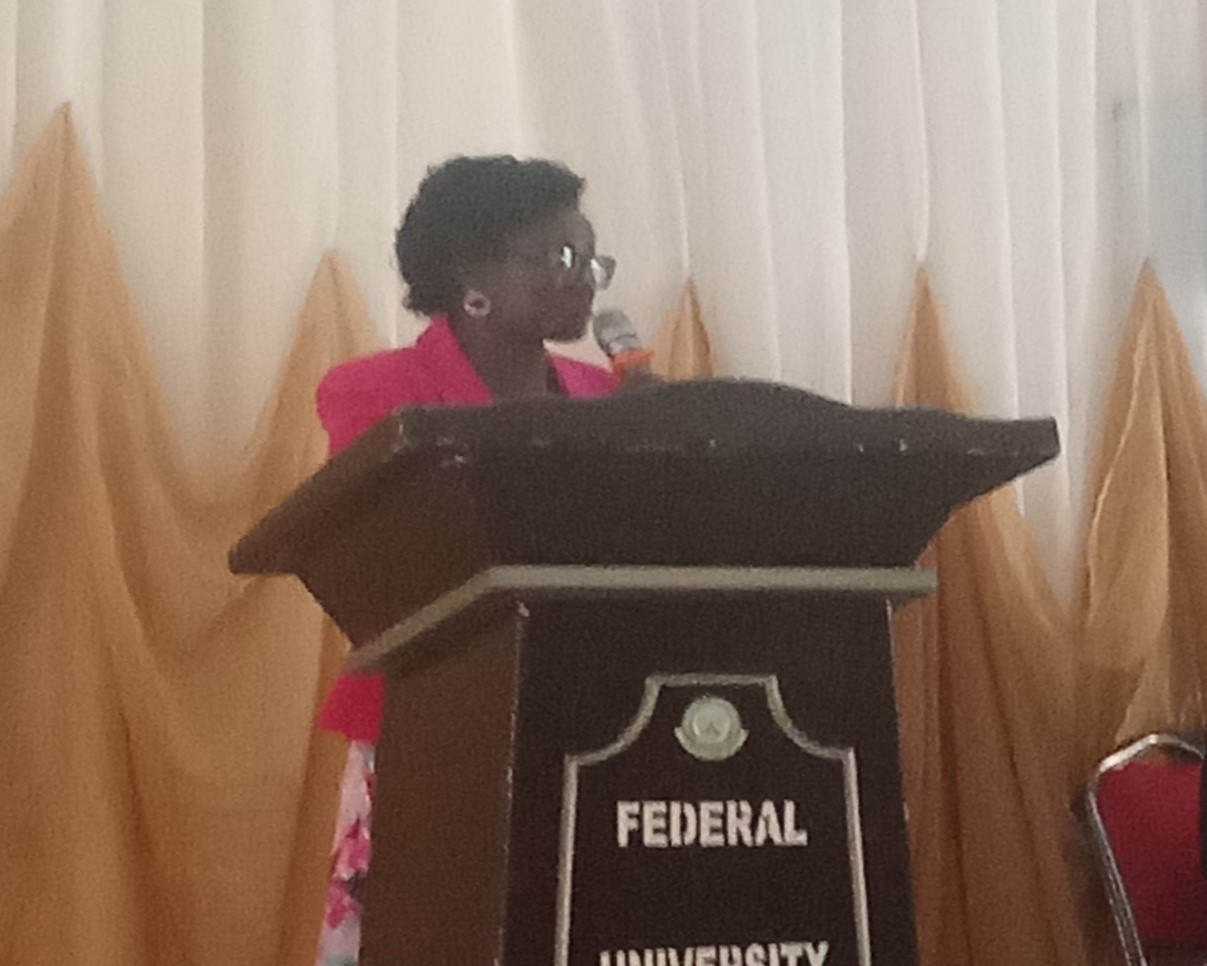
The keynote speaker, Professor Edna Ogechi Nwachukwu Ibegbulem, Professor of Chemical Pathology and Toxicology in the Faculty of Medical Laboratory Science, Rivers State University, Port Harcourt, welcomed all attendees and congratulated the Dean of the Faculty, Professor Eni-yimini S. Agoro, for transforming what she called “the baby Faculty” into a stellar institution within a remarkably short timeframe.
Professor Ibegbulem noted that the conference theme was well chosen, given that infertility has become a growing public health concern in Nigeria.
In her keynote address, she defined infertility as the inability to conceive or carry a pregnancy to term after one year of regular, unprotected intercourse, describing it as a major public health issue. She went on to discuss its prevalence rate and causes, the role of Medical Laboratory Scientists as key players in its diagnosis and clinical management, and, finally, the way forward.
She categorised infertility into two types, namely, primary infertility, where a woman has never conceived, and secondary infertility, where a woman has conceived before, whether the pregnancy resulted in a live birth, miscarriage, or stillbirth, but is now unable to conceive again.
Professor Ibegbulem decried the high prevalence of infertility in Nigeria, noting that studies show it affects 10–30% of couples, compared to 10–15% in developed countries.
She identified two broad categories of infertility. Female factors account for 40–50% of cases and fall into three groups. Ovulatory disorders, which prevent ovulation altogether, include polycystic ovary syndrome (PCOS), hormonal imbalance, and premature ovarian insufficiency. Tubal disorders, which prevent fertilisation, include fallopian tube damage, often from post-abortal or puerperal sepsis, as well as ectopic pregnancy and endometriosis. A third category affects implantation or the maintenance of pregnancy, and includes uterine fibroids, adhesions, and endometriosis.
Male factors, which account for 30–40% of cases, according to Professor Ibegbulem, include sperm disorders such as low sperm count, often linked to untreated or poorly managed infections. Ejaculatory disorders which prevent sperm from reaching the egg, include retrograde ejaculation (in which sperm enters the bladder instead of exiting the body), blockage of the epididymis (from infection, surgery, or birth defects), and blockage of the vas deferens (from the same causes). Erectile dysfunction, the inability to achieve or maintain an erection, is a further contributing factor.
She also identified mixed factors accounting for 20–30% of infertility cases, including age-related infertility, delayed childbearing due to late marriages, and lifestyle choices such as heavy smoking, excessive alcohol consumption, heavy metal exposure, and microplastic exposure. She further noted that childlessness carries deep social trauma in our society, compounded by religious and cultural beliefs, female circumcision, child marriage, polygamy, and excessive stress.
Describing Medical Laboratory Scientists as central to tackling infertility, Professor Edna Ibegbulem said accurate diagnosis, usually achieved through thorough clinical evaluation, remains key to managing couples’ infertility. She noted that the Faculty’s curriculum covers Endocrinology and Andrology, equipping graduates to carry out andrology and hormonal tests.
She affirmed that most infertility cases can be resolved through proper diagnosis and treatment, citing the range of management options now available to couples, from ovulation induction, in which medications such as Clomiphene or Letrozole stimulate the ovaries of women who ovulate irregularly or not at all, to timed intercourse, which involves closely tracking ovulation cycles and timing intercourse around the fertile window, often alongside ovulation induction, to Intrauterine Insemination (IUI), where washed and concentrated sperm are placed directly into the uterus to bypass the cervix and improve fertilization chances, in addition to treatment of underlying infections, hormone therapy, and procedures such as In-Vitro Fertilization, IVF.
She stressed that the medical laboratory scientist is central to treating infertility, since an accurate diagnosis is what makes the right treatment possible.
Earlier, in his welcome address, the Host and Dean of the Faculty of Medical Laboratory Science, FUO, Professor Eni-yimini Agoro, expressed profound gratitude to the conference attendees, describing the gathering as one that brought together “not merely as academics, scientists, clinicians, stakeholders, and students, but as a community united by a common purpose, the pursuit of knowledge in service to humanity.”
He described the conference as more than a symbolic gathering, calling it a genuine call to action that challenges participants to “ask whether we are doing enough to understand the causes of infertility, to improve diagnostic accuracy, to expand access to quality reproductive healthcare, and to advance research that can transform lives.”
Professor Agoro also underscored the critical, if often overlooked, role of Medical Laboratory Science, describing it as “the silent engine of modern medicine.” He explained that “while patients may not always see the laboratory, nearly every critical clinical decision depends on the evidence it provides.” In reproductive health specifically, he noted, the discipline’s contributions are indispensable, spanning “hormonal assays and semen analysis to molecular diagnosis, genetic screening, microbiological investigations, and the rapidly evolving landscape of assisted reproductive technologies.”
In his remarks, the Chairman of the Organising Committee, Dr. Christopher O. Elemuwa, called for a shift in how the medical laboratory is perceived. “Too often, the laboratory is seen only as a place of tests,” he said. “Today, we reposition it as the frontline of solutions.” He pointed to a broad range of laboratory functions, from accurate semen analysis and hormonal profiling to the detection of infectious agents such as Chlamydia, gonorrhoea, and fungal mycetes, as well as molecular diagnosis and antimicrobial stewardship, as evidence that “the medical laboratory scientist holds the key to early detection, correct diagnosis, and rational treatment.”
The Chairman of the Occasion, Dr. Alex Ileimukumo Ogregade, described the theme of the 3rd Annual Conference of the Faculty of Medical Laboratory Science, Federal University Otuoke, as apt, noting that infertility is sometimes a factor in divorce in Nigeria.

He stressed that modern infertility management is built upon reliable laboratory investigations, noting that medical laboratory scientists stand at the forefront of evidence-based diagnosis. “Our expertise,” he said, “provides clinicians with the critical information required for appropriate treatment decisions. Without accurate laboratory data, infertility management would be largely speculative and reduced to a system of trial and error. Therefore, our profession as medical laboratory scientists remains a vital pillar in the journey from diagnosis to successful conception.”
He wished participants a fruitful conference, one that would equip them with the knowledge to help patients navigate the challenges of infertility.
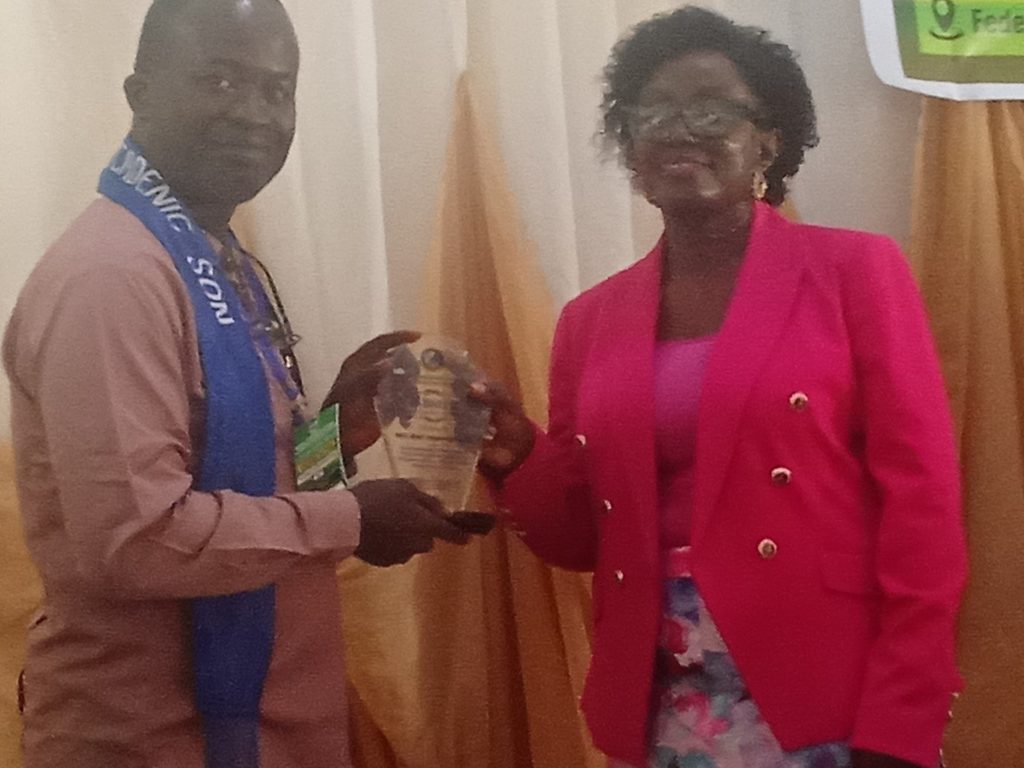
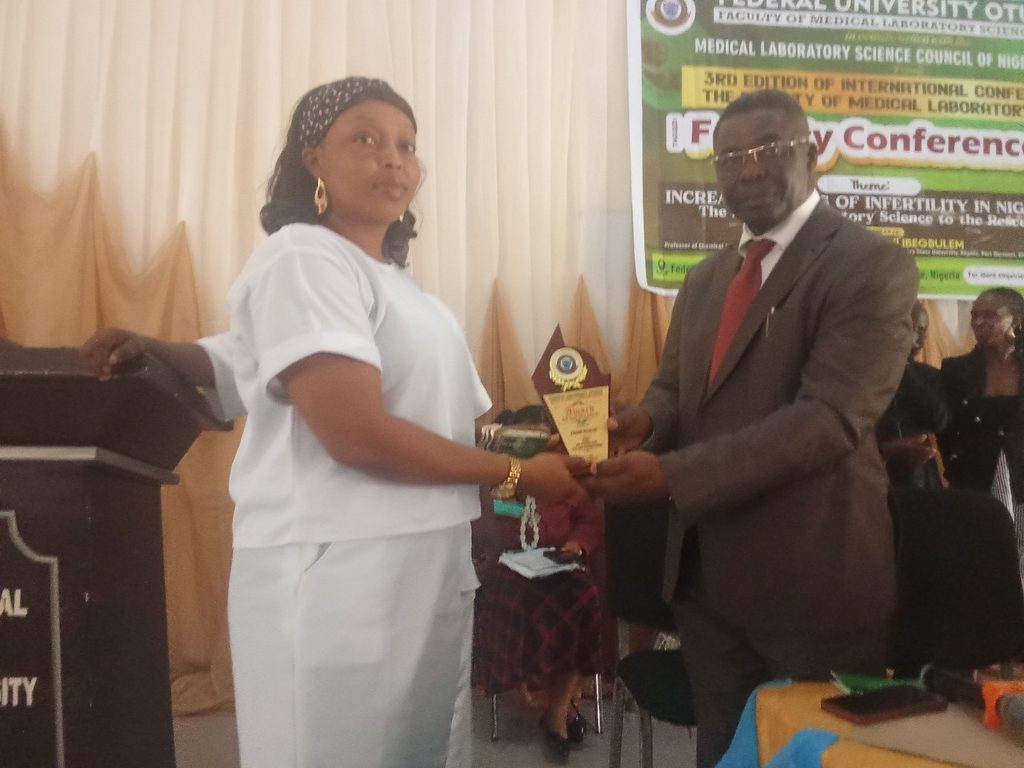
Highlights of the conference included an a cappella rendition by the Faculty of Medical Sciences (FUO) choir, a ballet performance by a student of the faculty, and an award ceremony recognising outstanding students, teachers, and the keynote speaker.